
深度卷积神经网络 AlexNet
Published:
本文结合机器学习理论、计算硬件和数据规模的发展介绍 AlexNet,分析其网络结构与计算复杂度,并展示各层输出形状和图像分类训练过程。
🎦 本节课程视频地址 👇
机器学习发展历程
机器学习理论的发展
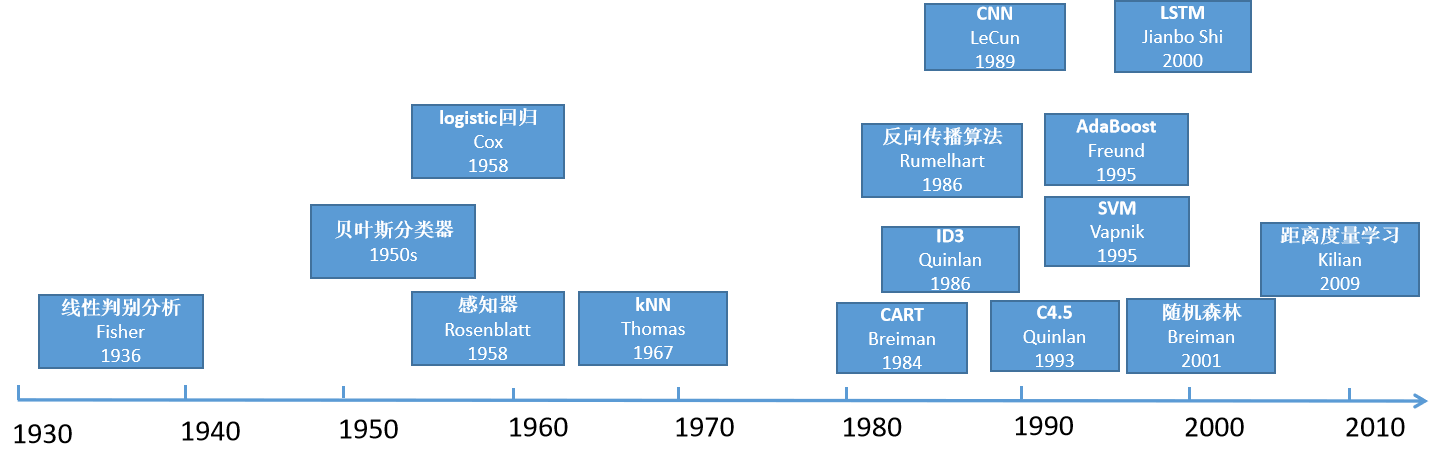
- 2000 年前后:核方法,有一套完整的数学模型,如 SVM
- 2000 年前后:几何学,把计算机视觉的问题描述成几何问题,如经典 CV 算法
- 2010 前后: 特征工程:如何抽取图片的特征,如 SIFT、视觉词袋
计算机硬件的快速发展
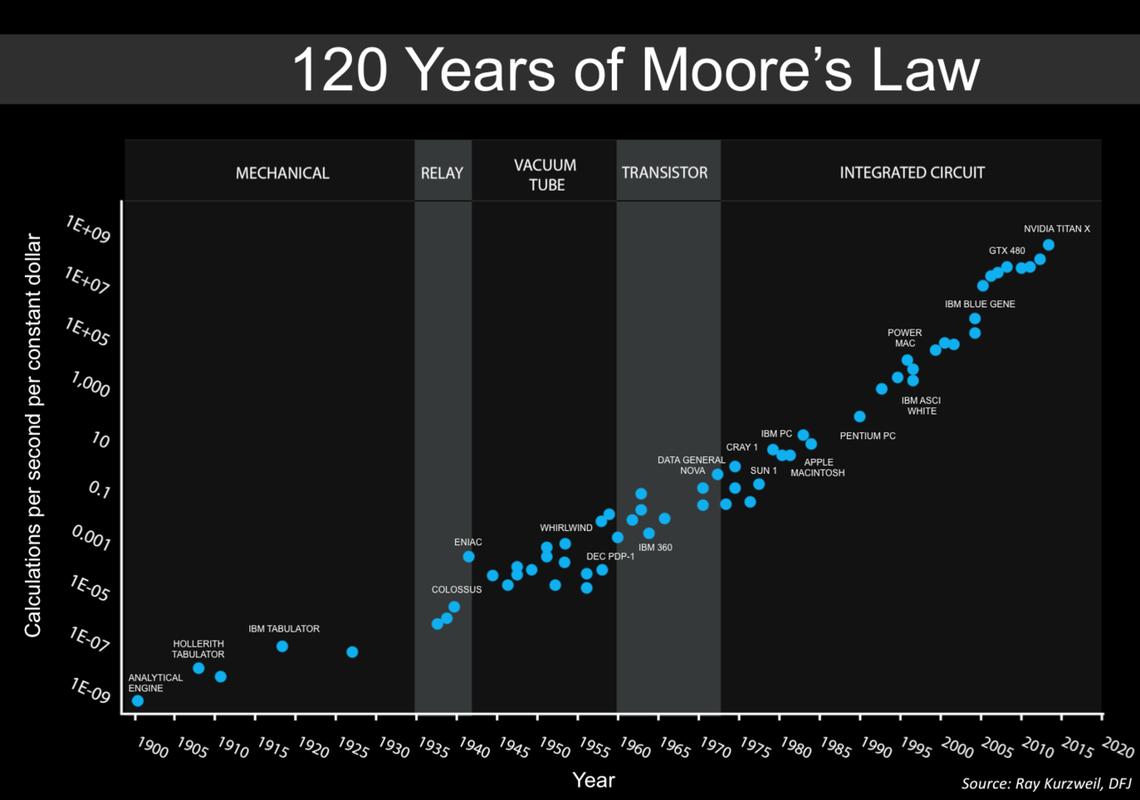
摩尔定律展示了半导体技术进步带来的计算能力的突飞猛进。
互联网的发展带来数据量的增长
- ImageNet(2010)
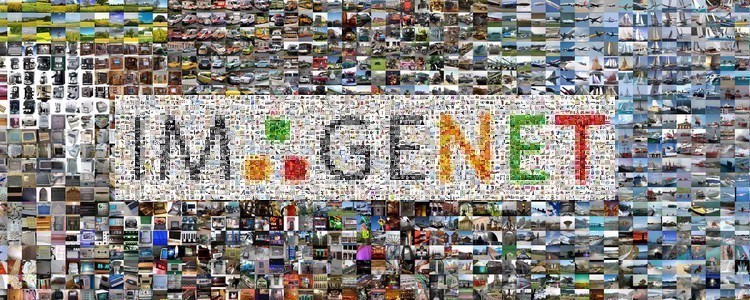
自然物体的彩色图: 469X387; 样本数:1.2M 类数:1000
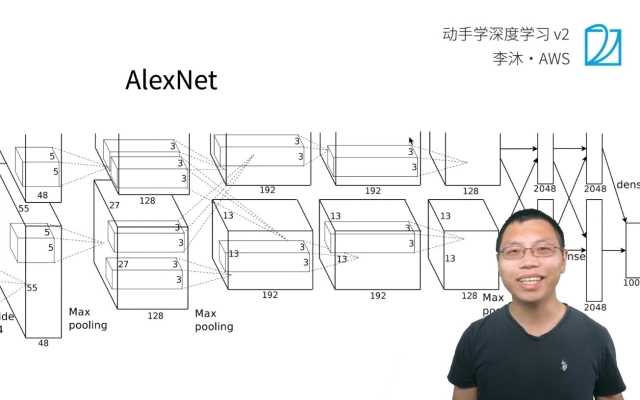
AlexNet
Alex Krizhevsky、Ilya Sutskever 和 Geoff Hinton 提出了一种新的卷积神经网络变体 AlexNet。在 2012 年 ImageNet 挑战赛中取得了轰动一时的成绩。
- 赢了 2012 年的 ImageNet 竞赛;
- 更深更大的 LeNet;
- 主要改进:
- 丢弃法
- ReLU(减缓梯度消失)
- MaxPooling(增大输出值,带来更大的梯度)
- 使用了数据增强(Data Arguments)
- 计算机视觉方法论的改变:从人工提取特征(SVM)到通过CNN学习获得特征,端到端学习;并且构造 CNN 简单高效——从原始数据(字符串、像素)到最终学习结果。
基本架构
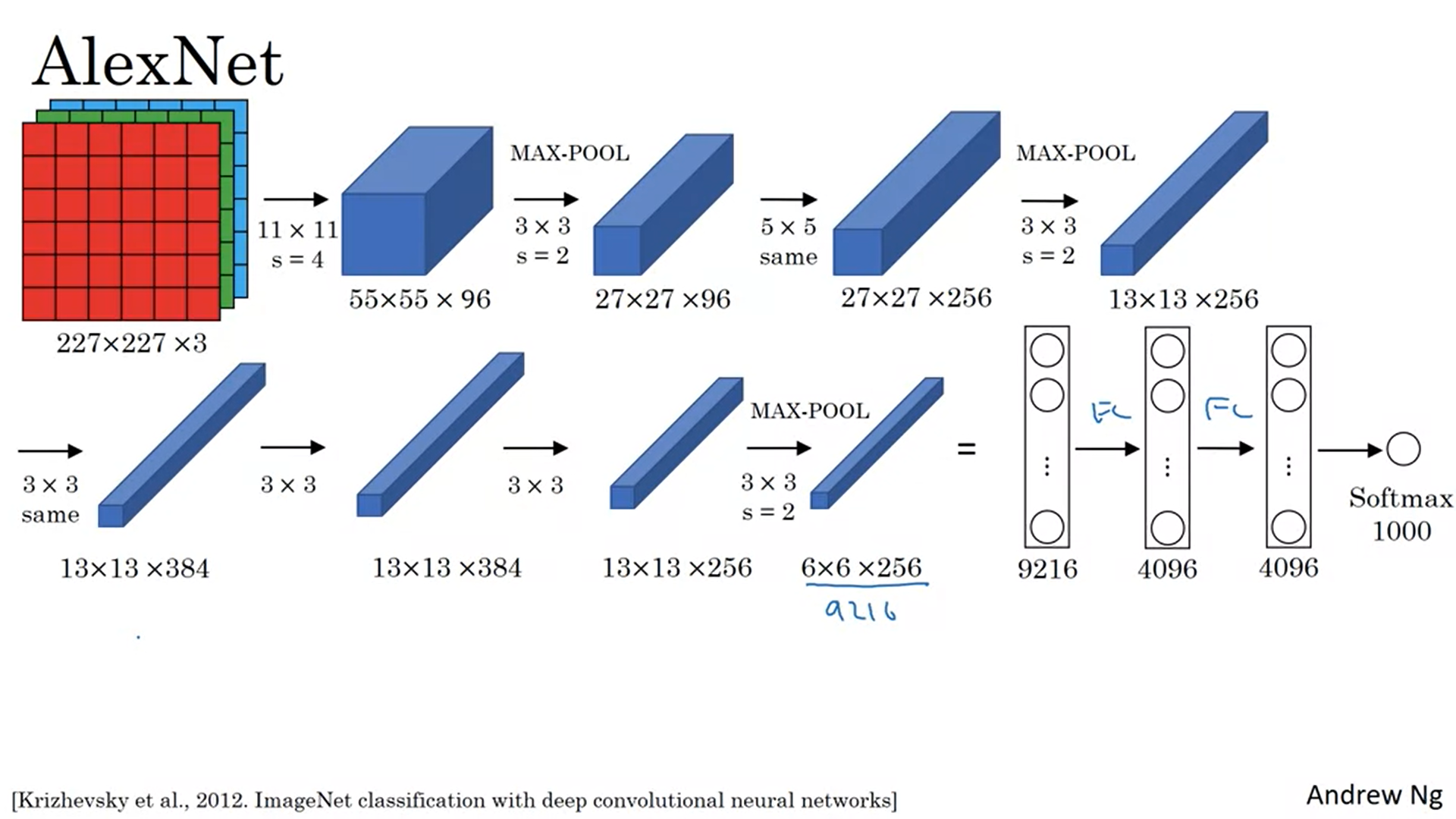
- AlexNet与LeNet架构对比
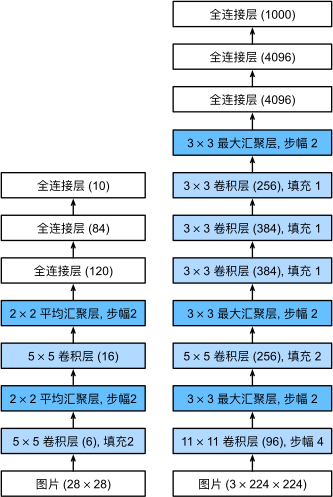
复杂度
| 参数个数 | FLOP | |||
|---|---|---|---|---|
| AlexNet | LeNet | AlexNet | LeNet | |
| Cov1 | 35K | 150 | 101M | 1.2M |
| Cov2 | 614K | 2.4K | 415M | 2.4M |
| Cov3-5 | 3M | 445M | ||
| Dense1 | 26M | 0.48M | 26M | 0.48M |
| Dense2 | 16M | 0.1M | 16M | 0.1M |
| Total | 46M | 0.6M | 1G | 4M |
| Increase | 76x | 1x(baseline) | 250x | 1x(baseline) |
总结
- AlexNet 是更大更深的 LeNet,10x 参数个数,260x 计算复杂度;
- 新加入了丢弃法、LeRU、最大池化层和数据增强;
- AlexNet 当赢下了 2012ImageNet 竞赛后,标志着新的一轮神经网络热潮的开始。
代码实现
- 定义网络结构
import torch
from torch import nn
from d2l import torch as d2l

net = nn.Sequential(
    # 因为课程使用的FashioMNIST数据集,为灰度单通道图像
    nn.Conv2d(1, 96, kernel_size=11, stride=4, padding=1), nn.ReLU(),
    nn.MaxPool2d(kernel_size=3, stride=2),
    nn.Conv2d(96, 256, kernel_size=5, padding=2), nn.ReLU(),
    nn.MaxPool2d(kernel_size=3, stride=2),
    nn.Conv2d(256, 384, kernel_size=3, padding=1), nn.ReLU(),
    nn.Conv2d(384, 384, kernel_size=3, padding=1), nn.ReLU(),
    nn.Conv2d(384, 256, kernel_size=3, padding=1), nn.ReLU(),
    nn.MaxPool2d(kernel_size=3, stride=2), nn.Flatten(),
    nn.Linear(6400, 4096), nn.ReLU(), nn.Dropout(p=0.5),
    nn.Linear(4096, 4096), nn.ReLU(), nn.Dropout(p=0.5),
    nn.Linear(4096,10)
)
- 测试各层输出
X = torch.randn(1, 1, 224, 224)
for layer in net:
    X = layer(X)
    print(layer.__class__.__name__, 'Output shape:\t', X.shape)

# Out:
# Conv2d output shape:         torch.Size([1, 96, 54, 54])
# ReLU output shape:   torch.Size([1, 96, 54, 54])
# MaxPool2d output shape:      torch.Size([1, 96, 26, 26])
# Conv2d output shape:         torch.Size([1, 256, 26, 26])
# ReLU output shape:   torch.Size([1, 256, 26, 26])
# MaxPool2d output shape:      torch.Size([1, 256, 12, 12])
# Conv2d output shape:         torch.Size([1, 384, 12, 12])
# ReLU output shape:   torch.Size([1, 384, 12, 12])
# Conv2d output shape:         torch.Size([1, 384, 12, 12])
# ReLU output shape:   torch.Size([1, 384, 12, 12])
# Conv2d output shape:         torch.Size([1, 256, 12, 12])
# ReLU output shape:   torch.Size([1, 256, 12, 12])
# MaxPool2d output shape:      torch.Size([1, 256, 5, 5])
# Flatten output shape:        torch.Size([1, 6400])
# Linear output shape:         torch.Size([1, 4096])
# ReLU output shape:   torch.Size([1, 4096])
# Dropout output shape:        torch.Size([1, 4096])
# Linear output shape:         torch.Size([1, 4096])
# ReLU output shape:   torch.Size([1, 4096])
# Dropout output shape:        torch.Size([1, 4096])
# Linear output shape:         torch.Size([1, 10])
- 训练
batch_size = 128
train_iter, test_iter = d2l.load_data_fashion_mnist(batch_size, resize=224)

lr, num_epochs = 0.01, 10
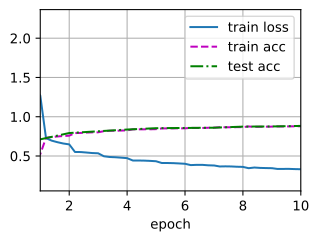
d2l.train_ch6(net, train_iter, test_iter, num_epochs, lr, d2l.try_gpu())

# Out:
# loss 0.333, train acc 0.877, test acc 0.879
# 4152.2 examples/sec on cuda:0
Q&A🤓
Q:使用GPU训练AlexNet时,报错CUDA error: CUBLAS_STATUS_NOT_INITIALIZED when calling cublasCreate(handle)是什么原因?
🙋♂️:一般是显卡显存不够了,可以尝试将batch_size调小一些试试。
Q:一般CNN要求输入图像是固定尺寸,实际应用中,数据尺寸不一,会怎样处理?强行resize吗?
🙋♂️:一般不会强行resize,否则会改变图像特征,而是保持长宽比不变的resize,在其中crop出符合要求的尺寸来。
配图说明:部分旧版图片链接已失效,现采用教材对应章节中的 PyTorch 示例图;图中数值可能与笔记保留的历史运行输出略有不同。